


Tom & Jerrys Militaria and Collectables
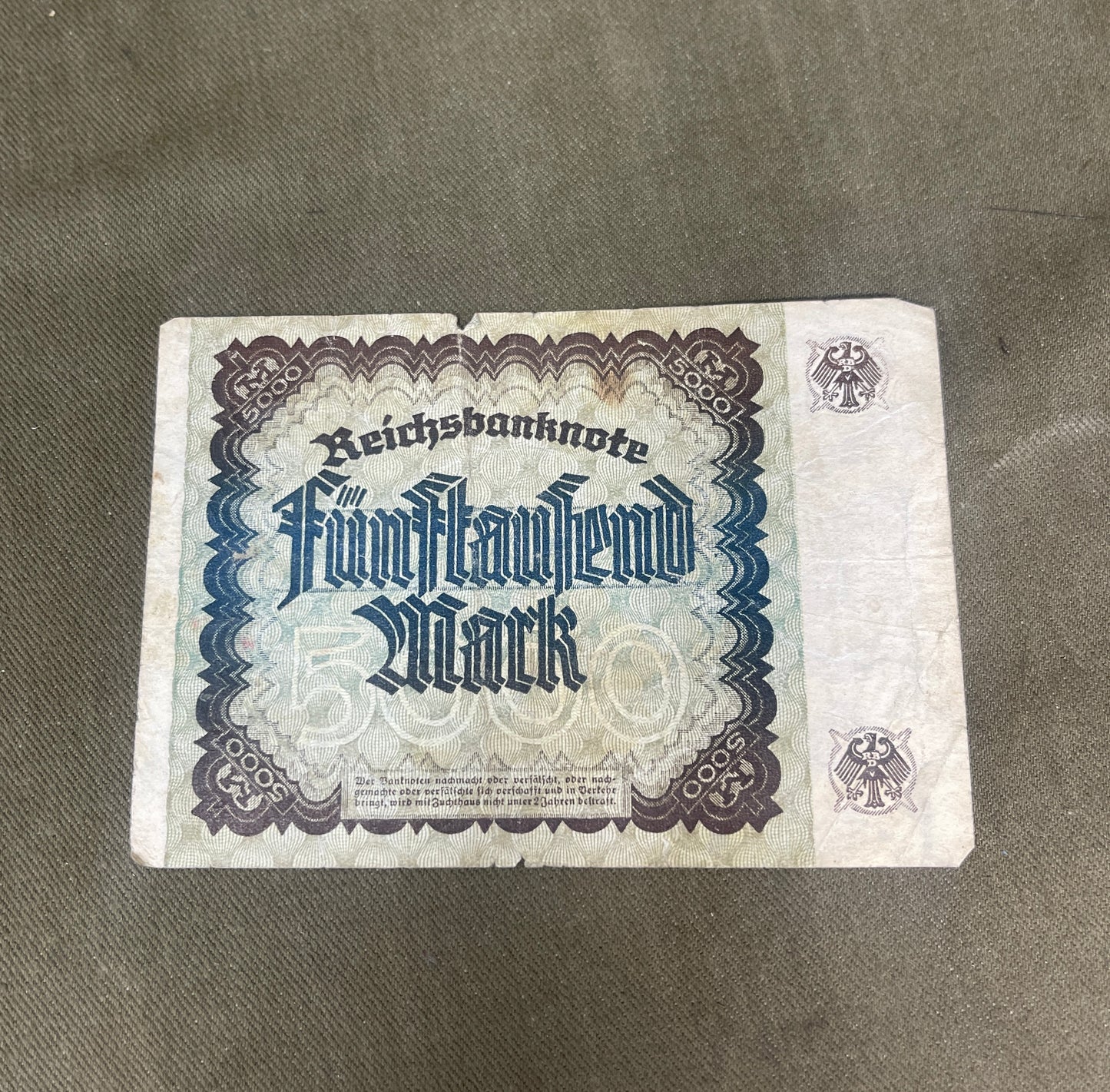
Germany 5000 Mark 1922 Reichsbanknote – Weimar Republic Historic Banknote
Germany 5000 Mark 1922 Reichsbanknote – Weimar Republic Historic Banknote
Couldn't load pickup availability

Product Condition
Product Condition
Shipping & Returns
Shipping & Returns
Shipping
We are unable to ship INERT ammunition outside of the UK
All orders are subject to a delivery, packing & handling charge. The correct charges will be automatically calculated via our Shopping basket ordering system and are based on the total weight of your order, your location, and our normal method of despatch. Please be aware that we reserve the right to alter any miscalculation, plus or minus, and you will be notified prior to shipping of any changes.
When shipping items, we use the UK Royal Mail, EVRI, DPD and Parcel Force in the event of a parcel arriving with contents damaged ALL the packaging must be kept for inspection by the delivering shipping contractor whoever that contractor is, failure to adhere to this WILL result in ANY claim being denied.
We do ship internationally and will always use a Tracked and Signed for service. We strive to use the best and most economical shipping services available
All shipping, insurance and import charges will be borne by the customer.
All lots are shipped at the buyers risk no compensation will be offered for items lost or broken in transit. Alternatively you can pay for your own courier.

Product Description
This original 1922 Germany 5000 Mark Reichsbanknote is a genuine relic of the turbulent economic period in the Weimar Republic, issued by the Reichsbank in late 1922. The note features classic period‑design elements: on the obverse a finely engraved portrait of the merchant figure (after a historic artwork), ornate border‑work and guilloche patterns, and the declaration of payment by the Bank’s main office in Berlin. The reverse carries decorative denomination markings, the imperial eagle motif, and anti‑counterfeit warnings typical of the era. en.numista.com+2de.numista.com+2
Though demonetised decades ago (as the Papiermark was replaced amid hyper‑inflation), this banknote retains strong historical and display appeal. As a window into one of Germany’s most turbulent monetary periods, it makes an excellent addition to collections focused on 20th‑century Europe, hyperinflation history, or obsolete currencies. Condition, legibility of print and serial numbers, and paper integrity will influence its collectible value — but even a circulated example offers a tangible connection to a remarkable chapter of economic history.